
Above the Law
How has executive power been shaped by rule of law in America?
In this lesson, students examine how the rule of law and the principle of limited government shape and constrain executive power in the United States. Through analysis of the Declaration of Independence, constitutional principles, and landmark Supreme Court cases, students investigate how presidential authority has been expanded, challenged, and restricted throughout American history. Students apply their understanding through legal reasoning, collaborative discussion, and a moot court activity focused on contemporary questions about executive power and constitutional limits
Objectives:
- Students will be able to define the rule of law, limited government, executive privilege, separation of powers, and protection of minority rights
- Students will be able to identify references to the rule of law in the Declaration of Independence
- Students will identify specific Constitutional powers of the president
- Students will learn and teach their peers a Supreme Court case relating to executive power and the rule of law
- Students will evaluate historically when executive powers been restricted and when they have been supported through Supreme Court rulings
- Students will read a current Supreme Court case focused on executive power and participate in a mini-moot court activity as lawyers and judges debating both sides of the case
Assessment:
- Student reflection on decisions and legal patterns relating to Limited Government Jigsaw
- Students will choose to either write a proposed constitutional amendment outlining limits on executive power or will write a ruling for the Trump v. Slaughter court case
Resources
Download Lesson
DownloadFeatured Lesson Plans
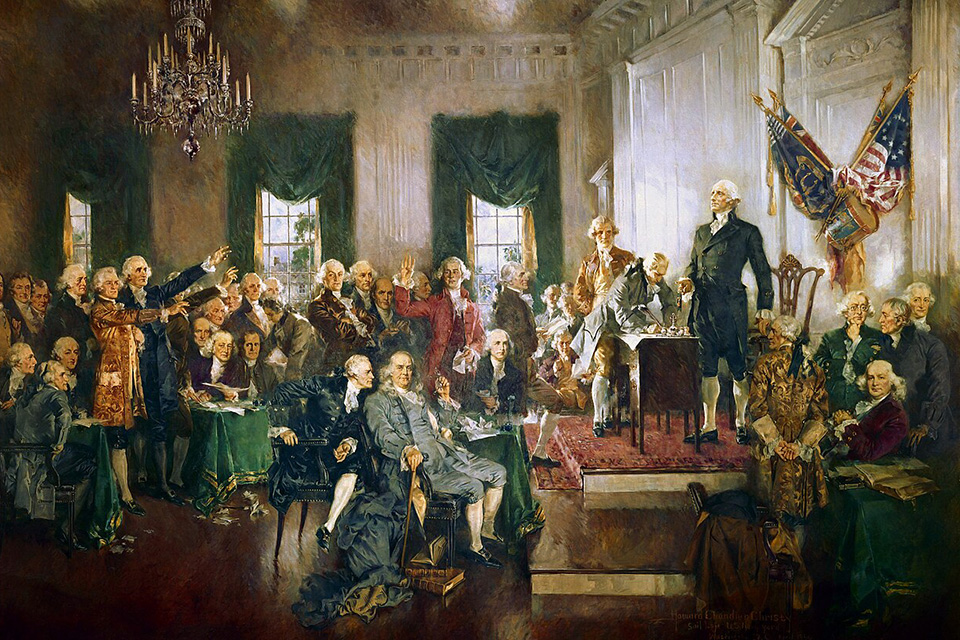
It Makes Sense! Common, That Is!
Students will trace the establishment of Republicanism in history using the primary sources including the Mayflower Compact, Common Sense, Declaration Of Independence, Articles Of Confederation, Constitution.
Pursuit of Happiness
In this lesson, students will investigate how Americans conceptualized the ‘Pursuit of Happiness’ at various points in history and how this relates to government action and their own individual civic virtue. Students watch a short video, examine excerpts from primary sources, and reflect on their own understanding of happiness through debate, dialogue, and writing. By the end of the lesson, students will evaluate whether it is more important to have a government of laws or a culture of individual civic virtue in order to promote the “pursuit of happiness.”
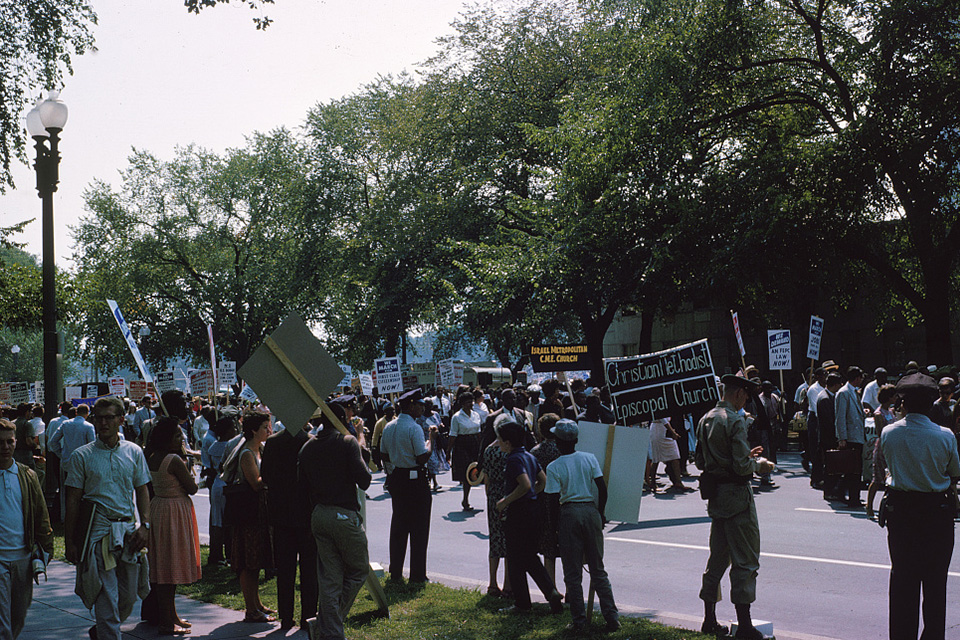
A Living Constitution
In this lesson, students investigate how the Constitution balances stability and change through the amendment process and civic participation. Through analysis of Article V, historical amendments, and case studies of social movements, students examine how citizens have influenced constitutional change over time. Students evaluate why the amendment process is intentionally difficult, explore how civic action can lead to reform, and consider the role of individuals and groups in shaping a living Constitution.