
Lesson Plans for America's 250th
Designed by teachers to help students navigate our nation’s history and constitutional principles using trusted, nonpartisan resources.
A Living Constitution
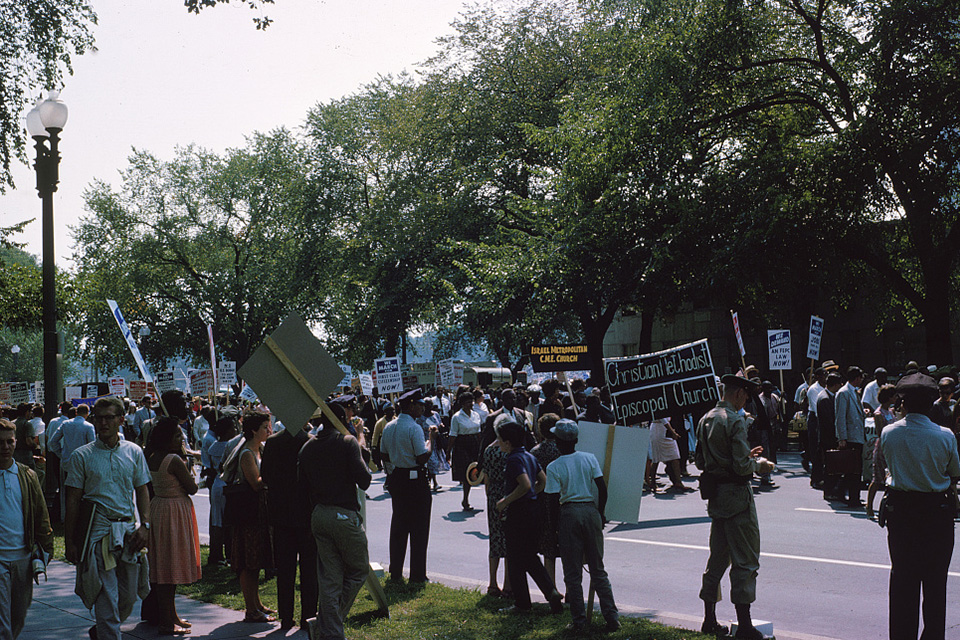
In this lesson, students investigate how the Constitution balances stability and change through the amendment process and civic participation. Through analysis of Article V, historical amendments, and case studies of social movements, students examine how citizens have influenced constitutional change over time. Students evaluate why the amendment process is intentionally difficult, explore how civic action can lead to reform, and consider the role of individuals and groups in shaping a living Constitution.
Above the Law
In this lesson, students examine how the rule of law and the principle of limited government shape and constrain executive power in the United States. Through analysis of the Declaration of Independence, constitutional principles, and landmark Supreme Court cases, students investigate how presidential authority has been expanded, challenged, and restricted throughout American history. Students apply their understanding through legal reasoning, collaborative discussion, and a moot court activity focused on contemporary questions about executive power and constitutional limits
An Unfinished Promise
In this lesson, students will first explore three primary sources that help students think about what the founding generation thought about the idea and ideal of equality. Students engage in inquiry by using the text of the primary sources to generate an answer to the first compelling question. Students then use evidence and reasoning to support their claim. In the second part of the lesson, students investigate additional primary sources to see how the ideals of human equality in the Declaration of Independence have inspired change throughout American history.
Beyond the Text
In this lesson, students investigate how the Supreme Court expands, limits, and redefines individual rights over time by analyzing landmark constitutional cases. Through a collaborative gallery walk and peer presentations, students compare legal precedents and construct an evidence-based argument on whether the Court should protect rights not explicitly written in the Constitution.
Civic Compass
Civic virtue has been defined by the National Constitution Center as the character of a good participant in a system of government. Understanding the necessity of working towards the common good and positive personal habits are necessary for the health of a democracy and a system of government. This lesson asks students to reflect on character formation and the example set by notable Americans in the past to see how they exemplified civic virtue. Students will then consider civic virtue and the examples from previous generations and build a case for a living American that embodies civic virtue and serves as a civic role model.
Colonial Grievances and the Social Contract
In this lesson, students examine how the grievances in the Declaration of Independence demonstrate a broken social contract. Through a matching activity and analysis of draft documents from the Library of Congress, students identify patterns of unfairness and evolving argumentation. Using a Claim-Evidence-Reasoning framework, they practice identifying them as legal arguments and apply their understanding to modern contexts before completing a final written evaluation.
Expanding the Vote
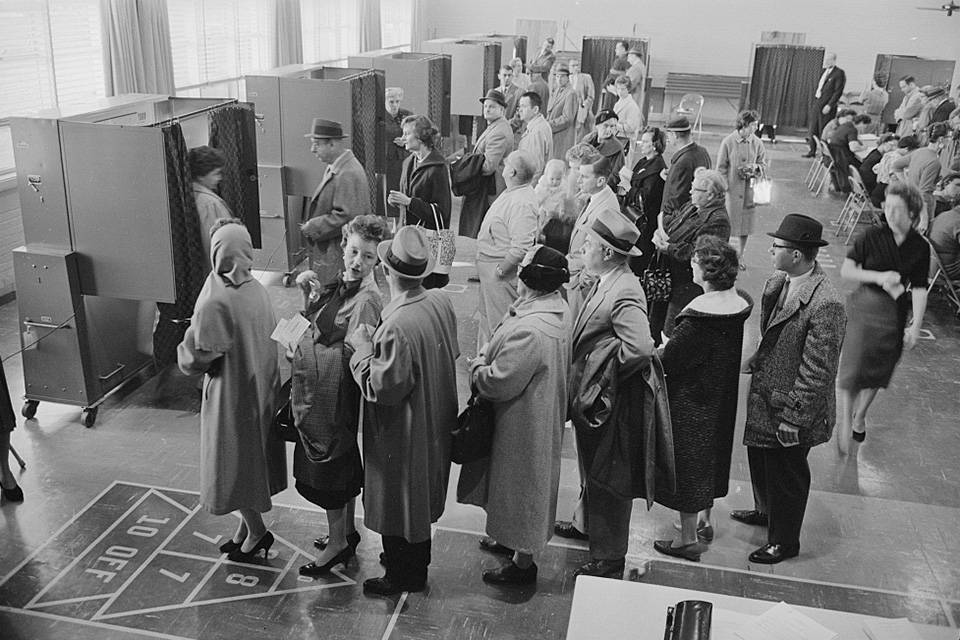
Students will explore the tension throughout United States history in expanding the elective franchise. This tension draws into question some of the Declaration of Independence’s founding principles: popular sovereignty, republicanism, and equality.
From Grievance to Government
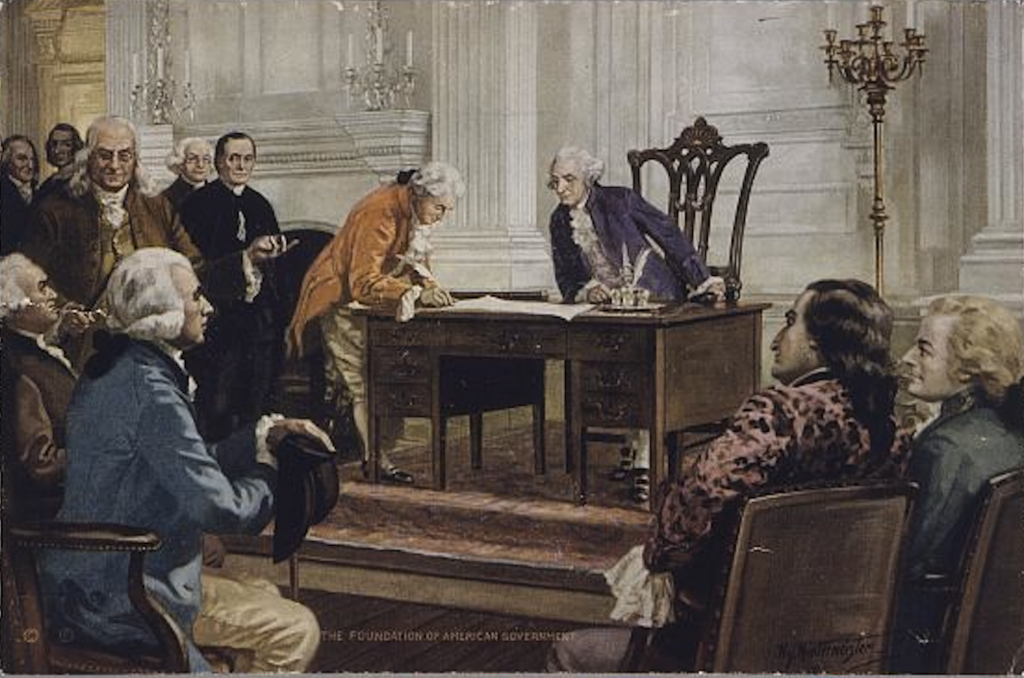
In this lesson students investigate how colonial grievances expressed in the Declaration of Independence influenced protections later included in the U.S. Constitution and Bill of Rights. Through primary source analysis and station activities, students examine specific grievances and connect them to constitutional protections designed to prevent abuses of government power. Students synthesize their learning by creating a one-page visual demonstrating how the experiences of the colonists helped shape a government designed to protect individual rights.
It Makes Sense! Common, That Is!
Students will trace the establishment of Republicanism in history using the primary sources including the Mayflower Compact, Common Sense, Declaration Of Independence, Articles Of Confederation, Constitution.
Power of One
This lesson explores ways in which people can engage in civic renewal beyond voting. Students will analyze a photo of a protest, and then read and analyze case studies about kids making a difference through non-voting civic renewal initiatives. As part of their case study analysis, students will learn and apply the definitions of “top down” and “bottom up” approaches to civic action. As tweens and young teens are legally unable to vote, the ultimate goal of this lesson is to showcase inspiring examples of civic renewal that did not involve the power of voting.
Promises and Protections: Are Rights Equal for Everyone?
Students will investigate whether natural rights have been equally protected for all people in the United States throughout history. Through analysis of constitutional rights, Jim Crow laws, voting rights expansion, and civic discussion, students will examine how rights and freedoms have been protected, limited, and expanded over time.
Protecting Natural Rights: The Bill of Rights and Government Power
Students will investigate how governments protect people’s natural rights by examining the Bill of Rights, grievances listed in the Declaration of Independence, and different forms of government. Through source analysis, collaborative discussion, and constructive dialogue activities, students will evaluate how democratic governments protect individual freedoms and how constitutional rights continue to shape civic life today.
Protecting Rights
Students will analyze how government power has been defined and limited over time through Influences on the Founding, various Founding Documents, and landmark Supreme Court cases.
Pursuit of Happiness
In this lesson, students will investigate how Americans conceptualized the ‘Pursuit of Happiness’ at various points in history and how this relates to government action and their own individual civic virtue. Students watch a short video, examine excerpts from primary sources, and reflect on their own understanding of happiness through debate, dialogue, and writing. By the end of the lesson, students will evaluate whether it is more important to have a government of laws or a culture of individual civic virtue in order to promote the “pursuit of happiness.”
Republic Means: Represent Me
In this lesson, students investigate the principle of republicanism by asking how government representatives decide and act upon what constituents want. Students watch short videos, research their representatives, analyze and amend a bill, and at the end of the lesson draft a letter to their members in Congress.
The Power of Your Voice!
In this lesson, students will investigate the meaning of natural rights, their place in the Declaration of Independence, and the role of citizens in protecting these rights. Students will engage in small-group deliberation, utilize a myriad of resources, and ultimately engage in a student voice project. By the end of the lesson students will have seen several examples of fellow students engaging in active citizenship, and how they might exercise their own voice.
The Promises of America
In this lesson, students will explore and evaluate period-relevant treaties in relation to the concept of social contracts and their evolution.
“In 1787, in the Northwest Ordinance, Congress pledged that the utmost good faith would always be observed towards the Indigenous peoples of the nation and that land would never be taken from them without their consent. In reality, the policy of the United States fluctuated many times over the next two hundred years.”
To Expand or to Limit, That Is the Question
Students will connect prior experience of expansion and contraction of voting rights to current debates.
Washington’s Legacy
In this lesson students will examine the foreign policy advice of President George Washington and then evaluate the policies for four other US presidents to analyze if they followed his advice.