
Beyond the Text
Should the Supreme Court protect rights that are not explicitly written in the Constitution?
In this lesson, students investigate how the Supreme Court expands, limits, and redefines individual rights over time by analyzing landmark constitutional cases. Through a collaborative gallery walk and peer presentations, students compare legal precedents and construct an evidence-based argument on whether the Court should protect rights not explicitly written in the Constitution.
Objectives:
- Students will analyze and compare Supreme Court decisions to assess how interpretations of natural rights have evolved over time, and construct an evidence-based argument about whether rights are inherent or dependent on government recognition.
Assessment:
- Students will work in pairs or trios to read about and then summarize an important Supreme Court case into an informational poster.
- Students will complete a gallery walk activity, with one member from each group staying with their poster and explaining to others.
- Students will participate in a class discussion.
- Students will respond to a culminating question in a short written reflection.
Resources
Download Lesson
DownloadFeatured Lesson Plans
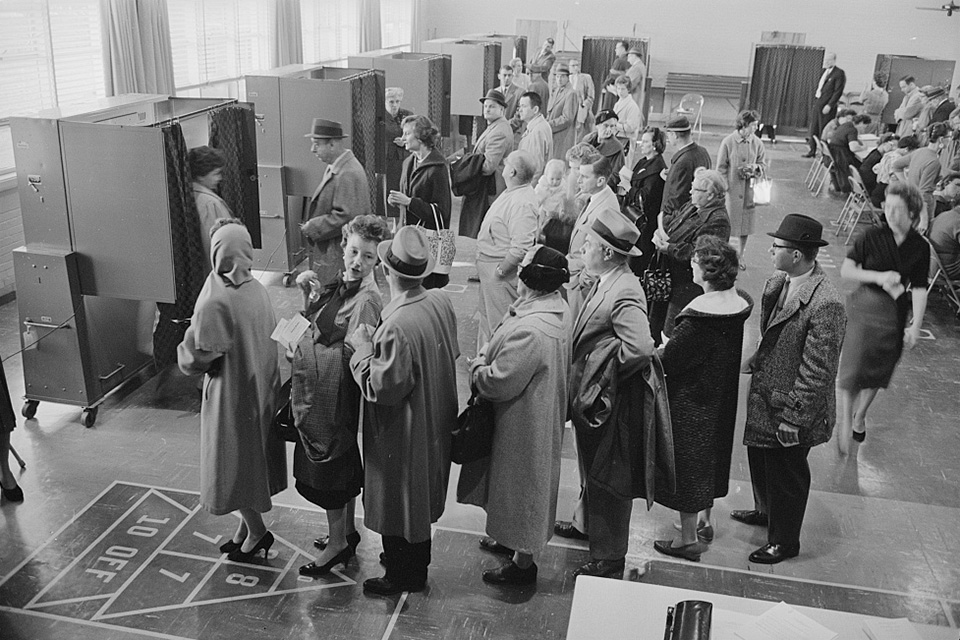
Expanding the Vote
Students will explore the tension throughout United States history in expanding the elective franchise. This tension draws into question some of the Declaration of Independence’s founding principles: popular sovereignty, republicanism, and equality.
To Expand or to Limit, That Is the Question
Students will connect prior experience of expansion and contraction of voting rights to current debates.
The Power of Your Voice!
In this lesson, students will investigate the meaning of natural rights, their place in the Declaration of Independence, and the role of citizens in protecting these rights. Students will engage in small-group deliberation, utilize a myriad of resources, and ultimately engage in a student voice project. By the end of the lesson students will have seen several examples of fellow students engaging in active citizenship, and how they might exercise their own voice.